



 by web@dmin
 2 December 2025
Many homeowners and architects struggle to balance ventilation, privacy, and aesthetics especially in compact urban environments. Solid walls block airflow, glass reduces privacy, and grills often look outdated.
This is where breeze blocks offer a practical, modern, and design-driven solution.
In this blog, you’ll learn how breeze blocks improve airflow, protect privacy without closing spaces, and elevate architectural style. We’ll also explore their benefits, applications, and practical considerations.
Here’s what you’ll find ahead:
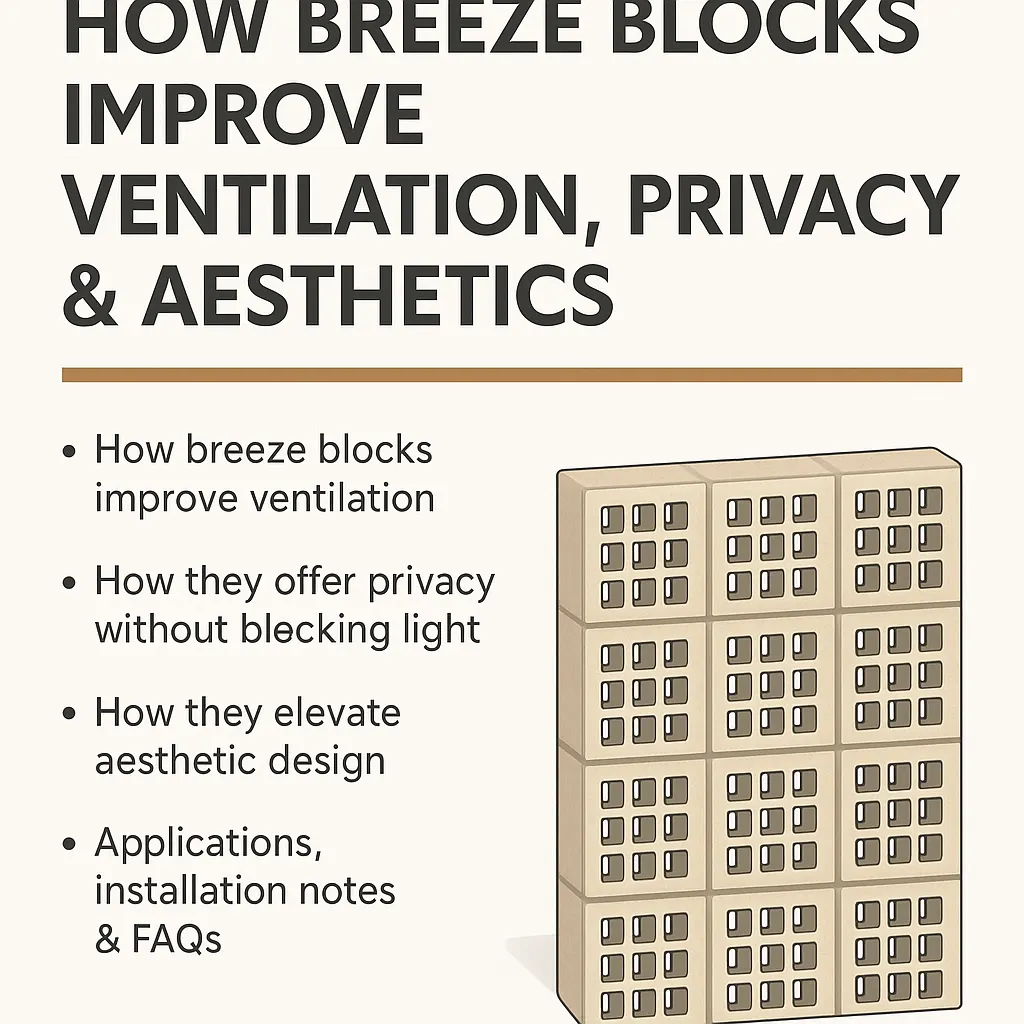
How breeze blocks improve ventilation
How they offer privacy without blocking light
How they elevate aesthetic design
What Are Breeze Blocks?
Breeze blocks also known as ventilation blocks, screen blocks, or perforated concrete blocks—are decorative masonry units designed to allow air and light to pass through while maintaining structural separation.
They are typically made from:
Cement
Concrete
Stone aggregates
Clay (in some modern versions)
Their unique perforated patterns make them ideal for both interior and exterior applications.
Key Features of Breeze Blocks
Lightweight yet durable
Perforated design for airflow
Decorative patterns for visual appeal
Suitable for tropical climates
Ideal for modern, traditional, or industrial styles
How Breeze Blocks Improve Ventilation
Proper ventilation is essential in Indian homes due to heat, humidity, and limited airflow in urban structures. Breeze blocks naturally enhance cross-ventilation.
Passive Cooling Through Air Circulation
The perforated design of breeze blocks allows fresh air to flow continuously between spaces.
This supports passive cooling, reducing dependence on fans or AC.
Benefits include:
Lower indoor temperature
Moisture control
Reduction in stale air pockets
Improved indoor air quality
Cross-Ventilation in Compact Spaces
In homes where windows cannot be added due to structural limitations, breeze blocks act as a breathable partition.
They create:
Air channels
Openable pockets for airflow
Cooler corridors and staircases
Ventilated compound walls
How Breeze Blocks Improve Privacy
Many homeowners want privacy without fully closing off spaces. Breeze blocks offer a balanced solution.
Visual Shielding Without Isolation
Their patterned openings create a semi-opaque barrier. From a distance, the pattern blocks direct view while still letting light pass through.
This is ideal for:
Balcony walls
Terrace partitions
Garden boundaries
Outdoor seating areas
Maintaining Openness in Interiors
Inside homes, breeze blocks form privacy screens that don’t make spaces feel boxed in.
Great for:
Bedroom separators
Kitchen dividers
Study room partitions
Entrance foyer privacy walls
How Breeze Blocks Enhance Aesthetics
Along with ventilation and privacy, breeze blocks are widely used for their aesthetic value.
Visual Texture and Depth
Patterns create light-and-shadow effects, giving walls depth and a premium architectural look.
As sunlight moves, the shadows shift—creating dynamic visual interest.
Customizable Designs
Modern breeze blocks come in:
Geometric patterns
Floral motifs
Minimalist shapes
Mid-century modern designs
This allows designers to match them with any theme contemporary, rustic, tropical, industrial, or heritage.
Practical Applications of Breeze Blocks
Breeze blocks can be used across residential, commercial, and outdoor environments.
Interior Applications
Living room partitions
Dining area separators
Decorative hallways
Staircase highlight walls
Bedroom privacy screens
Exterior Applications
Compound walls
Balcony façades
Parking area walls
Terrace enclosures
Garden windbreaks
Outdoor seating areas
Technical Benefits of Using Breeze Blocks
Beyond aesthetics and airflow, breeze blocks provide functional performance benefits.
Durability and Weather Resistance
Concrete and stone-based blocks withstand:
Heat
Moisture
Rain
UV exposure
This makes them suitable for Indian climate zones.
Low Maintenance Requirements
Breeze blocks require:
Occasional cleaning
No repainting
No chemical treatments
This makes them cost-effective in the long run.
Lightweight Construction
Because they’re lighter than traditional bricks, they reduce:
Structural load
Foundation pressure
Installation time
Design Considerations Before Installation
To achieve the best results, consider these technical aspects.
Choosing the Right Pattern
Select patterns based on:
Privacy needs
Airflow requirement
Aesthetic preference
Placement & Orientation
Block alignment affects:
Ventilation direction
Sunlight penetration
Privacy levels
A professional installer can optimize this.
Joint Filling & Structural Support
For outdoor walls:
Use weather-resistant mortar
Add reinforcement if needed
Ensure proper drainage gaps
Why Breeze Blocks Are Popular in Modern Architecture
Modern design focuses on air, light, sustainability, and simplicity all of which breeze blocks naturally support.
Sustainability
Reduced AC usage
Passive cooling
Durable lifespan
Lower carbon footprint
Mid-Century Modern Revival
Breeze blocks became iconic in mid-century architecture and have returned as a premium design element in:
Villas
Resorts
Farmhouses
Modern apartments
Conclusion
Breeze blocks are one of the most versatile architectural elements for modern Indian homes. They improve ventilation, enhance privacy, and elevate aesthetics all while remaining durable and cost-efficient. Whether you’re designing interiors or building outdoor spaces, they offer both functional and visual advantages.
To explore premium, long-lasting breeze blocks for your project, visit NS Vistaa’s full product range.