



 by web@dmin
 16 August 2026
Ventilated Facades
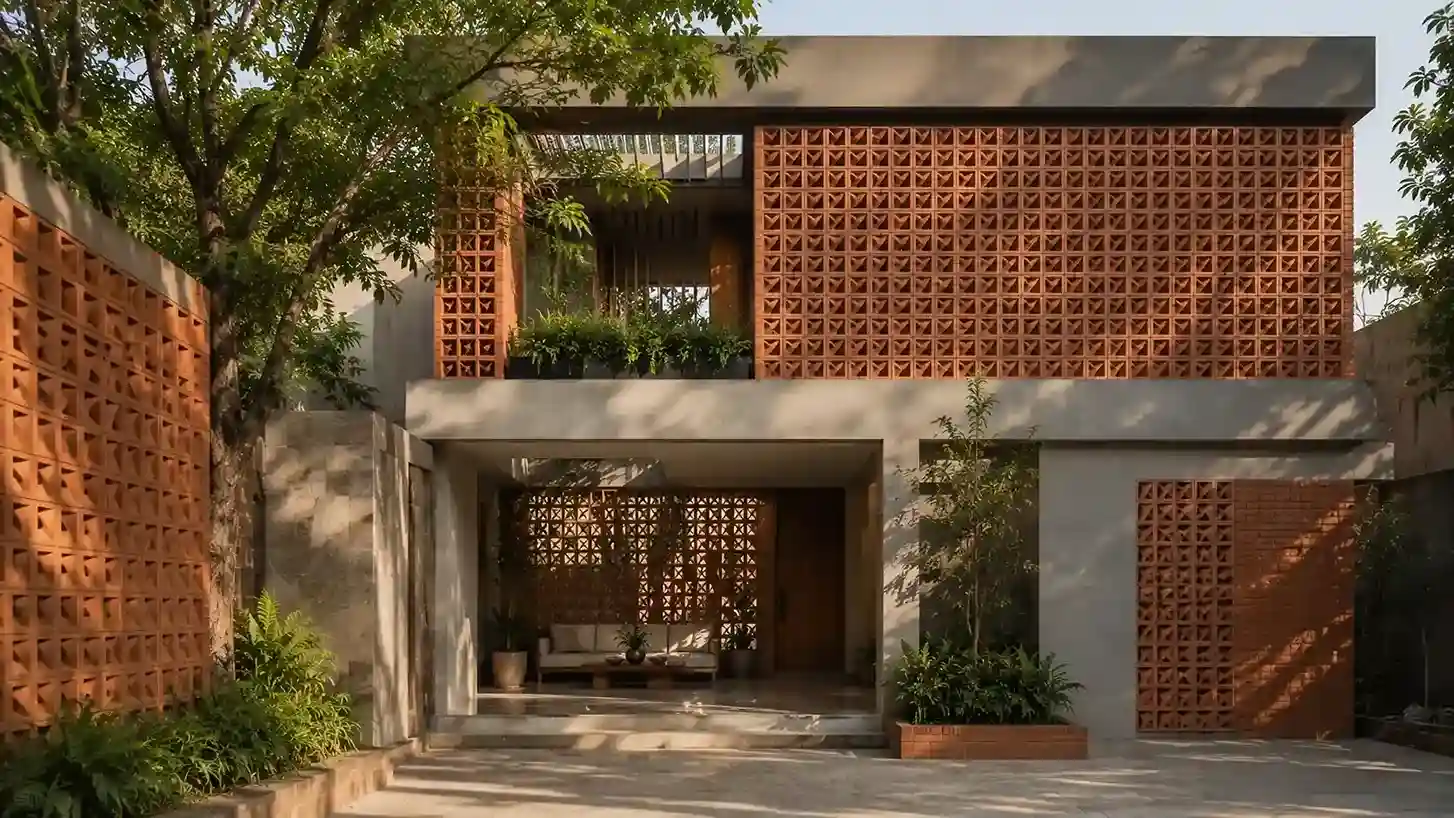
Breeze Blocks & Jali Walls: Modern Ventilated Facade Design
How perforated screens add shading, airflow, and visual pattern to a facade or interior wall.
Breeze blocks and jali walls have moved from a purely traditional architectural feature to a genuinely functional design tool in contemporary homes. A perforated screen does more than look striking, it filters direct sun while still allowing airflow, which makes it a practical choice for stairwells, balconies, and boundary walls in Gujarat’s hot, dry summers.
This guide covers where these ventilated designs work best, what maintenance they actually need, and whether they suit interior applications as well as exteriors.
Where Breeze Blocks and Jali Screens Work Best
Stairwells and Corridors
Bringing filtered daylight and airflow into internal circulation spaces that would otherwise need artificial lighting throughout the day.
Balconies and Terraces
A jali screen offers privacy and sun protection while keeping outdoor spaces from feeling fully enclosed.
Boundary and Compound Walls
A perforated boundary wall provides some privacy without the fully blocked-off feel of a solid concrete wall.
Facade Accent Panels
Used as a defined section of a larger elevation, breaking up a solid brick or plaster wall with a patterned, lighter element.
Do Jali Walls Need Special Maintenance?
Not particularly, beyond what any exterior masonry element needs. Dust and debris can accumulate in the perforations more than on a flat wall, so periodic cleaning with a brush or low-pressure wash keeps the pattern visually crisp. Terracotta and concrete breeze block units are generally low-maintenance materials that hold up well outdoors with minimal upkeep beyond routine cleaning.
Can Jali Walls Be Used Indoors?
Yes, and it’s becoming more common as an internal partition or room divider, particularly between a living area and a study or dining zone where full separation isn’t wanted but some visual and airflow distinction is. Indoor applications don’t need to withstand weather exposure, so lighter terracotta panels or decorative concrete units both work well, chosen more for pattern and light-filtering effect than weather performance.
The terracotta cladding panels and breeze block range covers both indoor and outdoor-rated options suited to these different applications.
Design Considerations Before Installing
- Decide how much privacy versus openness the perforation pattern should provide, denser patterns offer more privacy but less airflow.
- Confirm structural support requirements for larger jali or breeze block wall sections, especially for boundary walls.
- Consider how the pattern will look with light passing through it, both in daylight and with interior lighting at night.
- Coordinate the screen’s material and colour with adjoining exterior cladding for a cohesive facade.
Seeing Ventilated Screens in Practice
The full product range includes multiple breeze block and jali patterns suited to different levels of privacy and airflow. Browsing recent projects and learning more about the studio’s approach to facade design is a useful way to see how these elements are integrated into complete elevations.
Frequently Asked Questions
Do jali walls need special maintenance?
Not particularly, periodic cleaning to remove dust from the perforations keeps the pattern crisp, but otherwise these materials are low-maintenance.
Can jali walls be used indoors?
Yes, they’re increasingly used as internal partitions between living and study or dining areas, chosen mainly for pattern and light-filtering effect indoors.
Do breeze blocks provide real privacy?
It depends on the pattern density, denser patterns offer more visual privacy while still allowing airflow, lighter patterns trade some privacy for more openness.
Are jali walls structurally load-bearing?
Typically not, they’re generally used as a non-load-bearing screen element, though larger wall sections should be reviewed for structural support requirements.
Do jali screens actually reduce indoor heat?
Yes, by filtering direct sun exposure while still allowing airflow, they can meaningfully reduce heat gain compared to a fully glazed or solid wall.
What materials are breeze blocks made from?
Both terracotta and concrete versions are common, chosen based on desired texture, colour, and whether the application is indoor or outdoor.
Can a jali wall be combined with brick cladding on the same facade?
Yes, this is a common combination, using the jali as an accent section against a larger brick or plaster wall.
Are jali patterns suitable for a boundary or compound wall?
Yes, they’re commonly used for boundary walls to provide partial privacy without the fully closed-off feel of solid concrete.
How does a jali wall look with interior lighting at night?
Backlit jali patterns create a distinctive silhouette effect at night, which is worth considering during the design stage if lighting is planned nearby.
Add Airflow and Pattern to Your Space
Breeze blocks and jali screens combine functional shading with a striking visual pattern, indoors or out.
Explore breeze block and jali options or get in touch to discuss your project.