



 by web@dmin
 18 August 2026
Material Comparison
Cladding Bricks vs Natural Stone: A Comparison
Durability, installation, cost, and appearance, how the two facade materials actually stack up.
Cladding brick and natural stone both deliver a textured, premium facade finish, but they differ meaningfully in weight, installation process, cost, and long-term maintenance. Choosing between them, or combining both on the same elevation, comes down to understanding these practical differences rather than appearance alone.
This comparison breaks down where each material has a genuine advantage, and where the choice comes down more to personal preference.
Side-by-Side Comparison
| Factor | Cladding Brick | Natural Stone |
|---|---|---|
| Weight | Lighter, easier on substrate walls | Heavier, may need structural consideration for large areas |
| Installation | Generally faster, standardised units | Slower, often requires more skilled cutting and fitting |
| Cost | Generally more cost-effective | Generally higher, especially for premium stone types |
| Uniformity | Consistent size and pattern, predictable finish | Natural variation, no two pieces identical |
Which Is More Durable, Cladding Brick or Natural Stone?
Both are genuinely durable materials when properly installed, and the difference in longevity is usually smaller than people expect. Natural stone has an advantage in that it’s essentially unaffected by UV fading since colour is inherent to the material throughout, while quality clay-fired brick also holds colour well but relies on consistent firing to achieve the same result.
In practice, both materials, whether clay brick or stone cladding, will outlast a plaster and paint finish by a wide margin, so the durability decision often comes down to secondary factors like weight, cost, and installation timeline rather than which one degrades faster.
Is Natural Stone Harder to Install?
Generally yes. Natural stone pieces vary in size, thickness, and shape, which means more manual fitting, cutting, and skilled labour to achieve a clean finish compared to the standardised dimensions of cladding brick units. This translates directly into longer installation timelines and typically higher labour costs for a stone facade compared to an equivalent brick cladding project.
Brick’s uniform sizing also makes it easier to plan coverage and order quantities accurately, whereas stone often requires additional buffer material to account for cutting waste around irregular pieces.
Where Each Material Has the Edge
- Cladding brick wins on cost, installation speed, and predictable uniformity for larger wall areas.
- Natural stone wins on distinctive, one-of-a-kind visual character and inherent colour permanence.
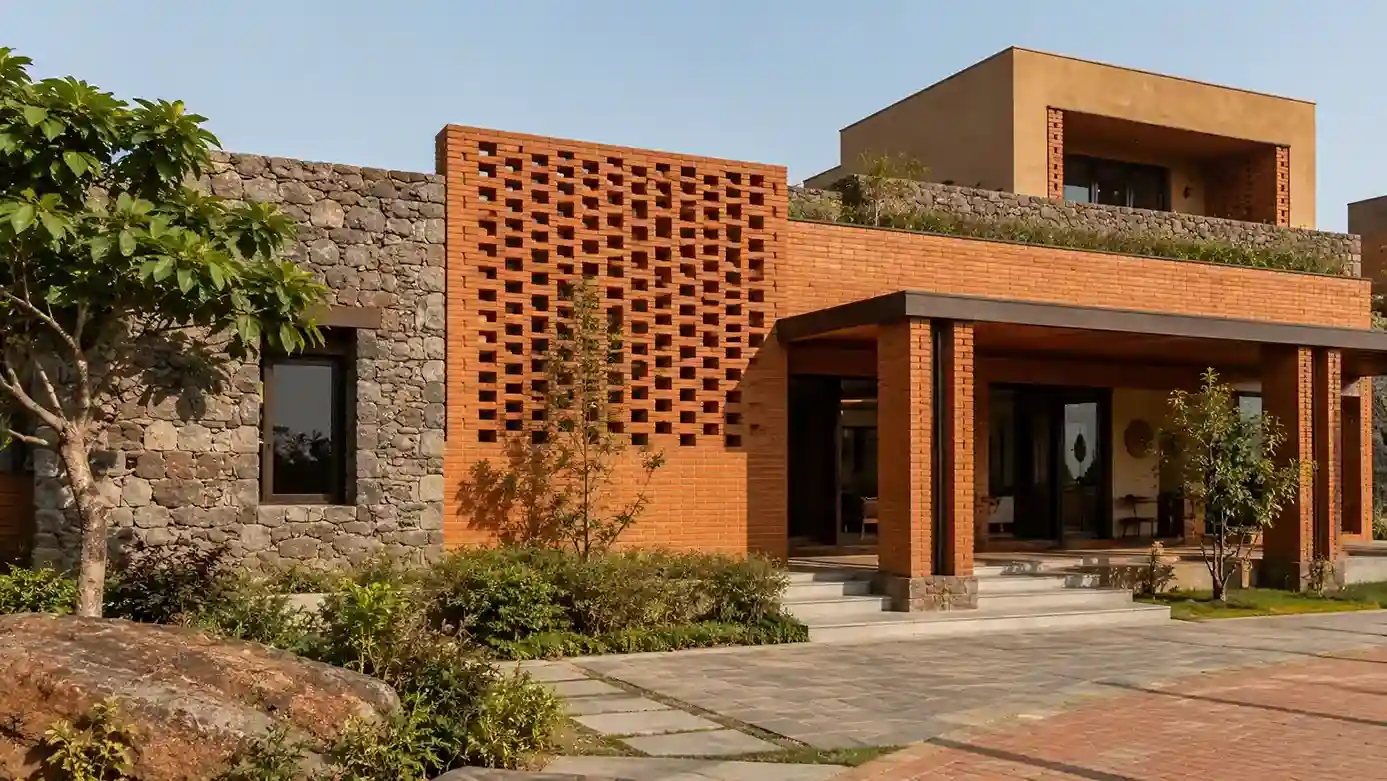
- Combining both, brick across the main wall with a stone accent at the entrance or base, is a common way to get the benefits of each.
- For a stone look with brick’s practical advantages, stone-effect cladding brick is a middle-ground option worth reviewing.
Reviewing Options Side by Side
The full product range includes both brick and natural stone cladding options, and browsing recent projects shows how the two materials have been combined on real facades, which is often more useful than comparing them in isolation.
Frequently Asked Questions
Which is more durable, cladding brick or natural stone?
Both are genuinely durable when properly installed. Stone has inherent colour permanence, while quality clay brick also holds colour well through consistent firing.
Is natural stone harder to install?
Generally yes, its irregular sizing requires more cutting and skilled labour than the standardised dimensions of cladding brick.
Which is cheaper, brick cladding or natural stone?
Cladding brick is generally more cost-effective, both in material and installation labour, than natural stone.
Can brick and stone be combined on the same facade?
Yes, this is a common approach, using brick for the main wall area and stone as an accent at entrances or the base.
Does natural stone need more structural support than brick?
It can, for larger wall areas, given natural stone’s greater weight compared to lightweight brick cladding veneer.
Is stone-effect brick a good compromise?
Yes, it offers a stone-like appearance with brick’s lighter weight and easier installation, a practical middle-ground option.
Does brick offer a more uniform finish than stone?
Yes, brick’s consistent sizing gives a predictable, uniform pattern, while stone’s natural variation means no two pieces are identical.
Which installs faster on a large facade?
Cladding brick generally installs faster due to its standardised units, compared to the more manual fitting required for natural stone.
Does stone require more cutting waste than brick?
Yes, irregular stone pieces typically require more buffer material to account for cutting waste than standardised brick units.
Choose the Right Material for Your Facade
Both brick and stone deliver a lasting, premium finish. The right choice depends on your budget, timeline, and structural constraints.
Browse the full brick and stone cladding range or get in touch to discuss your project.