



 by web@dmin
 24 August 2026
Commercial Design
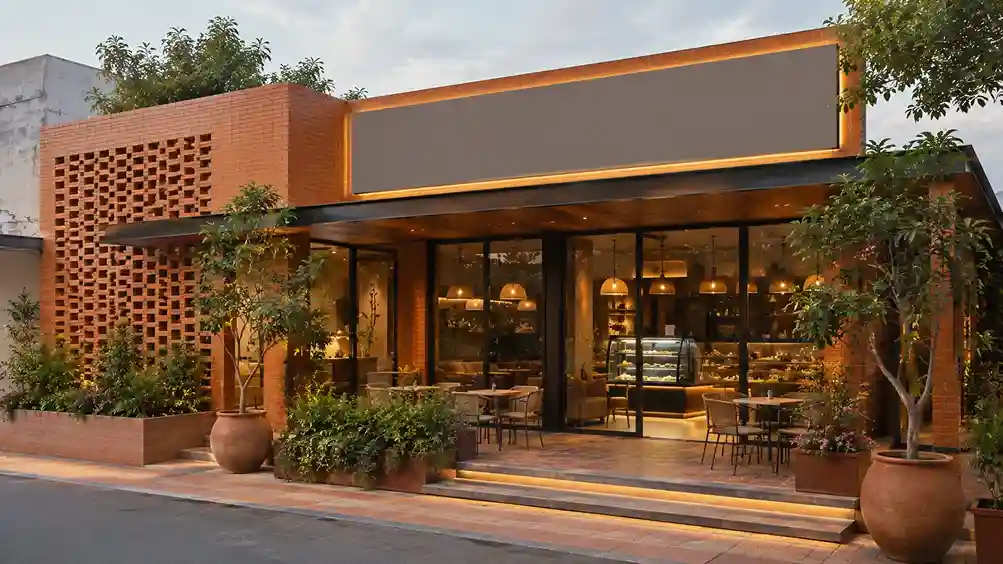
Cladding Bricks for Cafes & Restaurants: Design Inspiration
How brick cladding holds up in high-footfall commercial spaces and pairs with other materials.
Brick has become something of a default aesthetic choice for cafes and casual restaurants, and for good reason, it adds warmth and an industrial-meets-cosy character that photographs well and ages gracefully under heavy daily use. Commercial spaces have different durability demands than residential interiors though, so it’s worth understanding what makes brick cladding hold up under constant footfall, spills, and cleaning.
This guide covers where brick cladding works best in a cafe or restaurant layout, how it pairs with other commercial materials, and what durability considerations matter most.
Is Cladding Brick Durable Enough for High-Footfall Commercial Spaces?
Yes, quality-fired cladding brick is well suited to high-traffic commercial environments, since the material’s surface hardness comes from the firing process rather than a coating that can wear off with contact. Areas most exposed to contact, near seating edges, service counters, or entryways, benefit from a properly sealed finish that resists staining from food, drink, and frequent cleaning with commercial-grade products.
Where Brick Cladding Works Best in Commercial Layouts
Behind the Counter or Bar
A brick backdrop behind a service counter creates a strong focal point that photographs well and holds up to daily cleaning demands.
Main Seating Feature Wall
A full or partial brick wall along the main seating area, using interior cladding brick, sets the tone for the whole space.
Entrance and Storefront
Exterior-grade brick at the entrance gives a strong street presence and holds up to weather exposure and constant foot traffic.
Outdoor Seating Backdrop
A brick wall behind an outdoor or patio seating area adds character while withstanding sun and rain exposure with the right sealant.
Can It Be Combined With Wood and Metal Signage?
Brick pairs particularly well with warm wood tones and matte black or brass metal accents, a combination that’s become something of a standard for cafe and casual dining interiors precisely because the materials complement rather than compete with each other. Wood shelving, seating, or signage mounted against a brick backdrop reads as intentional and layered rather than mismatched, and metal fixtures, light fittings, or signage lettering add contrast without clashing.
For a more textured, handcrafted look that suits a casual or artisanal brand identity, rustic brick finishes tend to pair especially well with reclaimed or distressed wood elements.
Commercial-Specific Considerations
- Use a sealed finish in areas exposed to food, drink spills, and frequent commercial cleaning.
- Choose natural brick for a cleaner, more contemporary cafe aesthetic, or clay brick for classic warmth.
- Coordinate lighting placement early, brick texture reads very differently under warm ambient lighting versus bright overhead fixtures.
- Plan around fixed elements like electrical points and shelving brackets before installation, since drilling into finished brick is more disruptive.
Seeing Commercial Applications in Practice
Browsing the recent projects portfolio and client portfolio shows how brick cladding has been used across different commercial spaces, useful reference points when planning a cafe or restaurant fit-out. For a resource on brick pairing and detailing conventions more broadly, the Royal Institute of British Architects offers general architectural material guidance worth reviewing alongside project-specific advice.
Frequently Asked Questions
Is cladding brick durable enough for high-footfall commercial spaces?
Yes, quality-fired brick’s surface hardness comes from the firing process itself, and a properly sealed finish resists staining and daily wear well.
Can it be combined with wood and metal signage?
Yes, brick pairs particularly well with warm wood tones and matte black or brass metal accents, a common combination in cafe and restaurant design.
Does brick cladding need special sealant for commercial food areas?
Yes, a sealed finish is recommended in areas exposed to food, drink, and frequent commercial-grade cleaning products.
Which brick finish suits a modern cafe versus a rustic one?
Natural brick suits a cleaner, contemporary cafe look, while rustic brick with more texture variation suits a warmer, artisanal aesthetic.
Can brick cladding be used on an outdoor patio seating wall?
Yes, with an exterior-grade product and proper sealant, brick holds up well to sun and rain exposure in outdoor seating areas.
Does brick behind a service counter need different specification than a seating wall?
Generally the same brick works, but sealant matters more directly behind counters given more frequent contact and cleaning.
Is brick cladding cost-effective for a small cafe fit-out?
Yes, particularly for a single feature wall rather than a full space, it offers strong visual impact relative to its cost.
Should lighting be planned around a brick feature wall?
Yes, brick texture reads very differently under warm ambient lighting compared to bright overhead fixtures, worth planning early.
Can shelving be mounted directly onto brick cladding?
Yes, but it’s best planned before installation, since drilling into finished brick cladding is more disruptive than into plain wall surfaces.
Design a Space That Holds Up to Daily Business
Brick cladding brings character to a cafe or restaurant without compromising on the durability commercial spaces demand.
Explore interior cladding brick options or browse recent projects for inspiration.