



 by web@dmin
 27 August 2026
Sustainable Building
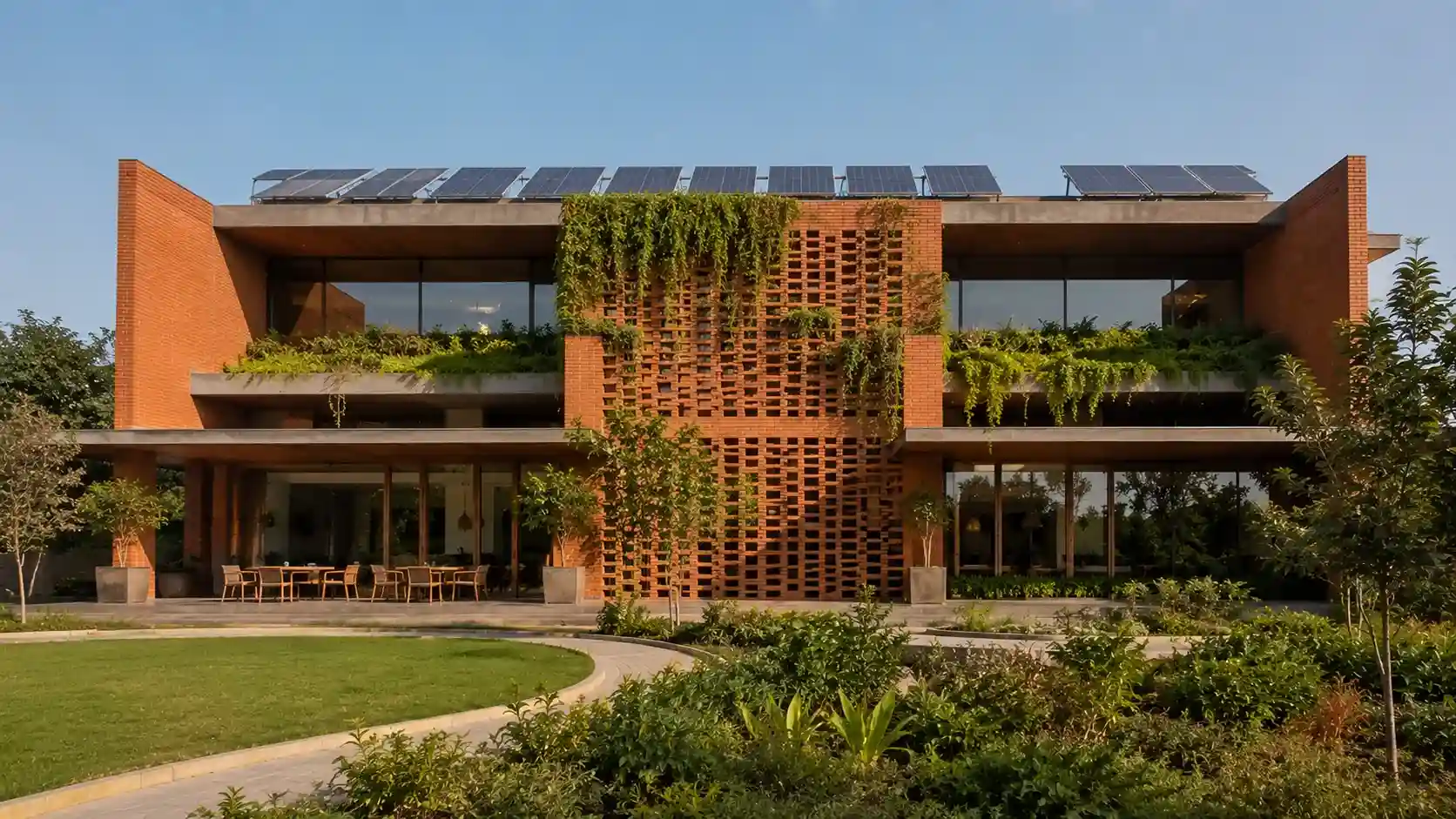
Eco-Friendly & Sustainable Cladding Materials for Green Buildings
How cladding brick compares to other facade materials on environmental impact, and what actually counts toward green certification.
Sustainability in facade materials involves more than one factor, embodied carbon in manufacturing, source material extraction impact, product lifespan, and end-of-life recyclability all play a role. Cladding brick performs well on several of these fronts specifically because of its long lifespan and the relatively simple, natural composition of fired clay.
This guide covers how cladding brick compares to other facade materials on genuine environmental impact, and what to look for if green building criteria matter for your project.
What Makes a Cladding Material Genuinely Sustainable
Long Product Lifespan
A material that lasts decades without replacement has a lower lifecycle impact than one needing frequent renewal, regardless of its initial manufacturing footprint.
Natural, Low-Processing Materials
Fired clay brick involves fewer synthetic additives and processing stages than some composite cladding panels, a factor worth weighing in overall impact.
Local Sourcing
Materials sourced and manufactured regionally reduce transportation-related emissions compared to imported facade products shipped long distances.
Thermal Performance
Brick’s thermal mass properties can contribute modestly to a building’s overall energy efficiency by moderating indoor temperature swings.
Are Cladding Bricks More Eco-Friendly Than Natural Stone?
This depends heavily on sourcing distance and extraction method for both materials. Locally quarried stone can have a comparable or even lower footprint than manufactured brick in some cases, while stone transported over long distances carries a much higher transportation impact. Locally manufactured clay brick generally has an advantage in supply chain predictability and reduced transport emissions when sourced regionally within Gujarat.
Neither material is definitively “more sustainable” in every case, it depends on specifics like quarry location, manufacturing process, and transport distance for the particular products being compared.
Do Sustainable Materials Cost More?
Not necessarily. Quality cladding brick, chosen for its durability and long lifespan, often works out cost-competitive over time compared to lower-durability alternatives that need earlier replacement, even if the upfront material cost is similar or slightly higher. The sustainability advantage of a long-lasting material and its cost-effectiveness tend to align, since both stem from the same underlying durability.
For projects targeting formal green building recognition, reviewing the Indian Green Building Council’s residential criteria or the broader green new buildings framework gives a clearer sense of which material properties actually contribute toward certification points.
Questions to Ask a Supplier About Sustainability
- Where is the material manufactured, and how far will it travel to your site?
- What is the expected product lifespan under normal outdoor exposure?
- Are there any recycled-content options within the natural brick range?
- Does the manufacturing process follow any recognised environmental or quality standards?
Certification Frameworks Worth Knowing
For projects pursuing formal green ratings, the GRIHA product catalogue and broader GRIHA rating system are India-specific references that outline material and building performance criteria relevant to facade choices. These frameworks are useful even for homeowners not pursuing formal certification, since they clarify what genuinely counts as a sustainability advantage versus marketing language.
Frequently Asked Questions
Are cladding bricks more eco-friendly than natural stone?
It depends on sourcing distance and extraction method for both materials. Locally manufactured brick generally has an advantage in transport emissions when sourced regionally.
Do sustainable materials cost more?
Not necessarily. Quality, durable brick often costs less over time than lower-durability alternatives needing earlier replacement, even at a similar upfront price.
Does local sourcing really matter for sustainability?
Yes, transportation distance is a meaningful contributor to a material’s overall footprint, so regionally manufactured brick has an advantage over long-distance imports.
Does brick’s thermal mass actually improve energy efficiency?
It can contribute modestly by moderating indoor temperature swings, though the overall building design and insulation matter more for total energy performance.
Is there a recognised green certification for cladding materials in India?
The Indian Green Building Council and GRIHA rating systems both provide frameworks that outline material and building performance criteria relevant to facades.
Does a longer product lifespan really reduce environmental impact?
Yes, a material that lasts decades without replacement spreads its manufacturing footprint over a much longer useful life than one needing frequent renewal.
Should I ask suppliers about manufacturing location?
Yes, transportation distance to your site is a genuine factor in a material’s overall environmental impact, worth asking about directly.
Is fired clay brick considered a natural material?
Yes, it involves relatively simple processing of natural clay compared to some synthetic or composite cladding panels.
Do I need formal certification for my project to benefit from sustainable materials?
No, the durability and reduced maintenance of sustainable materials benefit any project, whether or not formal certification is pursued.
Build With Materials That Last
Durability and sustainability go hand in hand when choosing a facade material for the long term.
Explore natural brick options or learn more about the company and its sourcing.